Occupational safety23 February 20264 min readAndrii Lebedynets
Primary, refresher, unscheduled and targeted: types of safety briefings and key differences
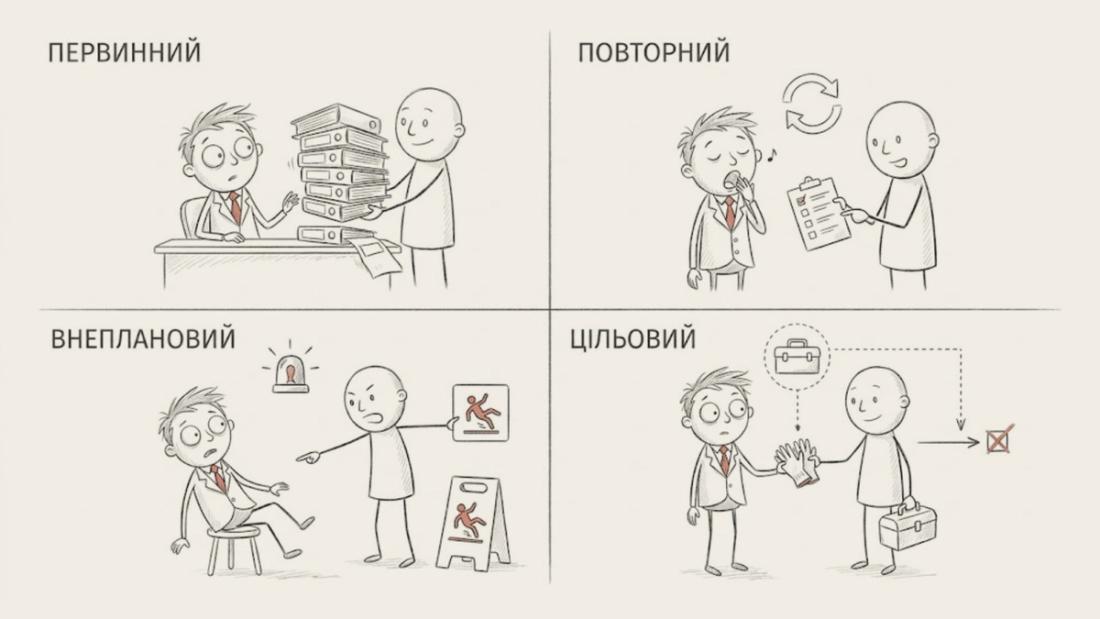
What occupational safety briefings are and why they matter
Key differences between briefing types
| Briefing type | When conducted | For whom | Where conducted | Conducted by | Documentation | Frequency |
| Primary | Before starting work or internship | New hires, transferred staff, trainees | Directly at the workplace | Supervisor or OHS specialist | Briefing log + employee signature | Once before work starts |
| Refresher | Regularly, per schedule | All employees | At the workplace | Supervisor/instructor | Log + knowledge check (if needed) | Every 3 or 6 months |
| Unscheduled | After changes in work/regulations, incidents | Everyone affected | Workplace or office | OHS specialist/supervisor | Briefing log | As needed |
| Targeted | Before one-time/high-risk tasks | Selected employees | Before the work location | Person in charge of the task | Log or work permit | Each time before the task |
Primary briefing
3.1. When it is conducted
- newly hired employees (including temporary and seasonal staff);
- employees transferred to a new position or a different workplace;
- pupils, students, and trainees completing an internship or practical training.
3.2. Where and who conducts it
3.3. Program and documentation
- a description of the workplace and working conditions;
- analysis of hazardous and harmful factors;
- rules for safe use of equipment;
- actions in case of accidents, fire, or injuries;
- location of the first-aid kit, fire extinguisher, and evacuation routes.
Refresher briefing
4.1. Frequency
- once every 3 months — for employees performing high-risk work;
- once every 6 months — for other production staff.
4.2. Scope and knowledge check format
4.3. Typical mistakes
- no entries in the log — the briefing was “done” but not documented;
- no knowledge check — the employee signed without actually learning;
- missed deadlines — the briefing was not conducted on time;
- the same date for all employees — a sign of a formal approach;
- missing signatures or incorrect completion of log fields.
Unscheduled briefing
5.1. Grounds for conducting
- amendments to occupational safety legal acts;
- introduction of new equipment, materials, technologies, or changes in the technological process;
- accidents, injuries, emergencies (at the company or similar facilities);
- a long break in work (over 30 calendar days for high-risk work, over 60 for low-risk work);
- orders from supervisory authorities or recommendations from OHS commissions or medical services.
5.2. How to document and who initiates it
Targeted briefing
6.1. One-time tasks: high-risk work, emergency response, work permit
- high-risk work (e.g., work at height, confined spaces, use of explosive substances, etc.);
- emergency response and elimination of consequences of natural disasters or other extraordinary events;
- temporary assignment to work outside the employee’s standard duties;
- work performed under a work permit (electrical safety, fire safety, gas-hazard work, etc.).
6.2. Content and responsible persons; links to fire/electrical safety
- assessment of potential risks;
- safety measures;
- personal protective equipment (PPE);
- emergency action plan;
- list of responsible persons;
- permit-to-work briefing (if applicable).
Documents and records: what you must have
- an order (policy) on organizing OHS training and briefings at the company;
- briefing programs for each type (induction, primary, refresher, etc.);
- occupational safety instructions by job role and type of work;
- an OHS briefing log/register with clearly defined fields:
- date of briefing;
- briefing topic;
- employee full name;
- position;
- signatures of the employee and the instructor.
Templates and a manager checklist
- sample order on organizing OHS briefings;
- sample OHS briefing log/register (digital or paper);
- example program for primary/refresher briefing;
- knowledge check act form after a briefing;
- permit-to-work template for targeted briefings;
- manager checklist for conducting briefings.
- Determine the briefing type and the grounds for conducting it.
- Prepare the program and up-to-date instructions.
- Conduct the briefing personally or delegate it to an authorized person.
- Ensure the employee understands the briefing content.
- Record it in the log (or in an act).
- If required — check knowledge or clearance to work.
Conclusions
- avoid fines and violations;
- reduce workplace accidents;
- improve employee safety awareness.
Questions & Answers (FAQ)

AuthorAndrii LebedynetsChief Technical Officer · Energy, MBA · Certified auditor ISO 9001 · 14001 · 45001
01GET IN TOUCH
Let’s discuss
your project
Leave your contacts — a RACIO engineer will call and answer your questions.