Occupational safety8 August 20263 min readAndrii Lebedynets
Labor Protection in Healthcare: From Needlestick Injuries to Infection Control
Labor protection in the healthcare industry combines risks that no other sector faces all at once: biological hazards from contact with patients and biological materials, chemical exposure to disinfectants and cytostatic drugs, physical strain from moving patients, and the psycho-emotional…
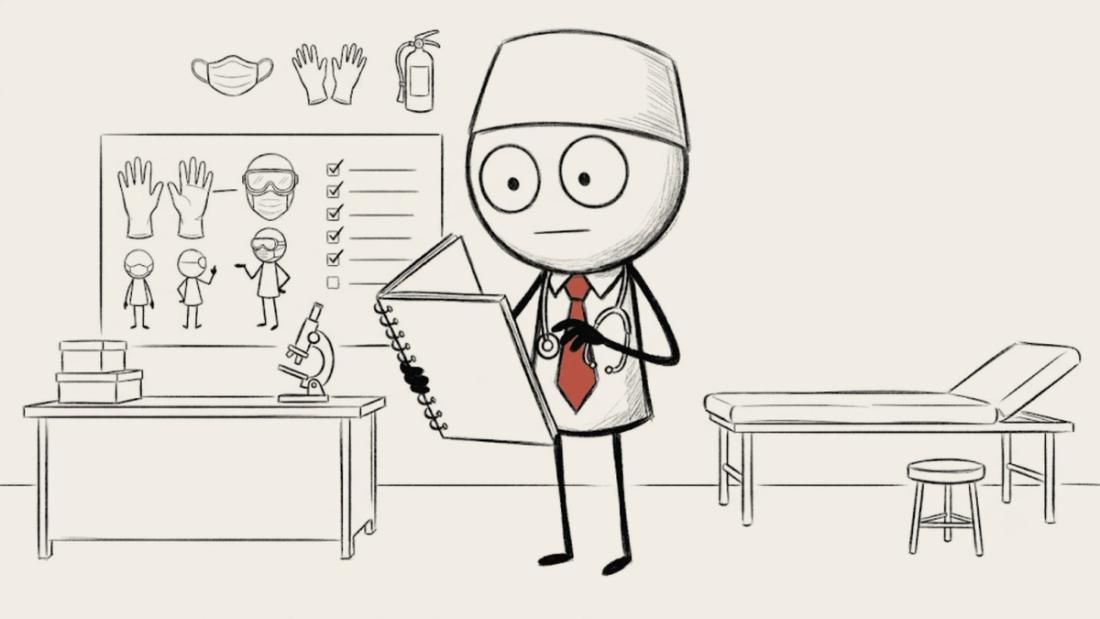
- Healthcare combines biological, chemical, physical, and psycho-emotional risks at the same time — which is why standard solutions from other industries simply do not work here.
- Legal liability for medical staff who violate labor protection law is separate from the liability of the facility itself as the employer.
- Medical workers undergo medical examinations more often and within a broader scope than staff in most other industries due to constant contact with biological factors.
- Personal protective equipment for medical staff is not just gloves and masks — it is a complete system based on the specific risk profile of each department.
- The five types of safety briefings in a medical facility have their own specifics and differ from those used in manufacturing or office environments.
Why labor protection in healthcare differs from other industries
Legal liability of medical staff for violating labor protection law
Key risks in medical facilities
- Biological factor — contact with infectious agents through blood, other bodily fluids, or airborne transmission, including the risk of needlestick or other sharps injuries;
- Chemical factor — disinfectants, anesthetics, and cytostatic drugs in oncology departments, whose vapors accumulate chronic exposure when ventilation and protection aren’t properly maintained;
- Physical strain — moving and lifting patients, prolonged standing, static postures during surgery;
- Radiation factor — relevant for radiology and imaging departments and staff working with the corresponding equipment;
- Psycho-emotional load — shift work, responsibility for a patient’s life, and working under uncertainty and stress that accumulates over years.
Personal protective equipment for medical staff
Medical exams for medical staff: how they differ from standard ones
Briefings and staff training in a medical facility
- Induction briefing — for every new employee, including temporary staff and interns, with an emphasis on the specifics of working with biological material.
- Initial workplace briefing — conducted directly in the department where the person will work, covering the specific equipment and protocols there.
- Refresher briefing — at least as often as required, since safety protocols in healthcare are updated more frequently than manufacturing norms.
- Unscheduled briefing — triggered by new equipment, a new drug or protocol, or an incident in another department that revealed a systemic gap.
- Emergency-response briefing — evacuating patients with limited mobility is significantly harder than evacuating office staff and requires separate drilling.
Workplace certification in medical facilities
Labor protection in healthcare under martial law
Where a healthcare facility manager should start
- Audit the current state separately for each department — the risks in surgery, the lab, and reception can’t be assessed with one checklist.
- Update the list of personal protective equipment to match specific risk profiles, not a minimal generic set.
- Check whether the staff medical exam program actually matches the real nature of biological and chemical exposure involved.
- Update the emergency response plan to reflect wartime conditions.
- Document how responsibility is divided between the facility as employer and each individual staff member.
Why healthcare facilities should order a labor protection audit
Frequently asked questions
Does every department in a medical facility need its own labor protection engineer?
Who’s liable if a medical worker is injured by a needlestick on the job?
Does labor protection differ between a private clinic and a public hospital?
How often does workplace certification need to be done in a medical facility?
Where should we start if our facility’s labor protection documents haven’t been updated in years?

AuthorAndrii LebedynetsChief Technical Officer · Energy, MBA · Certified auditor ISO 9001 · 14001 · 45001
01GET IN TOUCH
Let’s discuss
your project
Leave your contacts — a RACIO engineer will call and answer your questions.