What PPE should be provided to employees?
«Think you’re safe? Think again, and again….» — Unknown HSE engineer Recent joint researches by the World Health Organization (WHO) and the International Labor Organization (ILO) have shown that work-related illnesses and injuries have caused nearly 2 million deaths. Most work-related deaths were caused by respiratory and cardiovascular diseases.
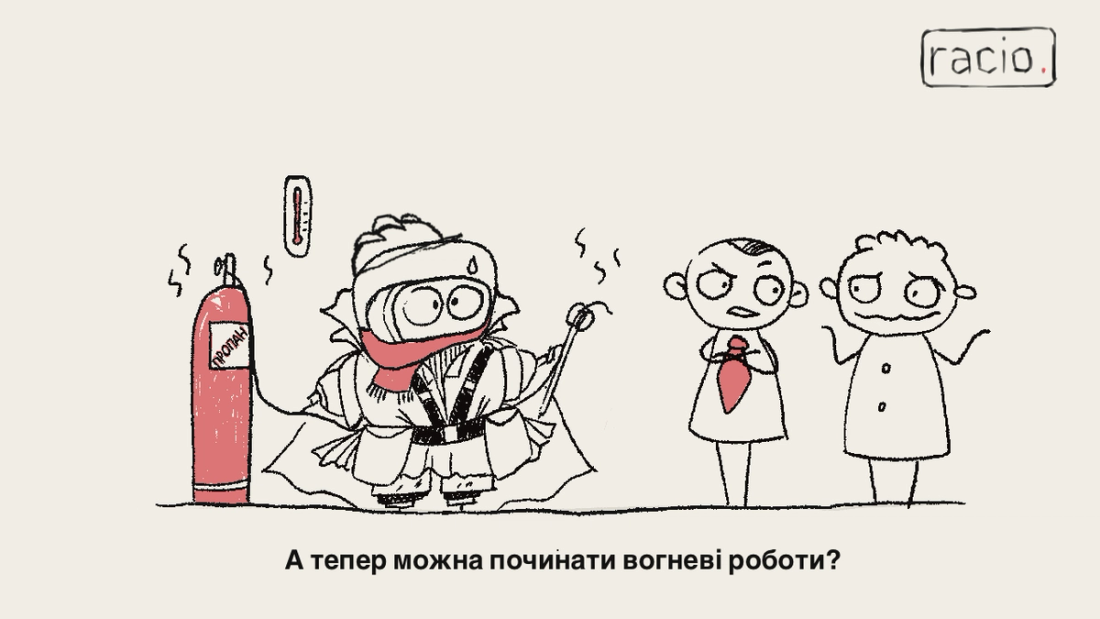
«Think you’re safe? Think again, and again….»
— Unknown HSE engineer
Recent joint researches by the World Health Organization (WHO) and the International Labor Organization (ILO) have shown that work-related illnesses and injuries have caused nearly 2 million deaths. Most work-related deaths were caused by respiratory and cardiovascular diseases. The most common injuries were to the head, eyes, and limbs.
The research has shown that:
- 84% of workers who suffered head injuries did NOT wear helmets.
- 60% of people with eye injuries neglected to wear protection.
- Only 23% of workers with foot injuries wore safety shoes.
According to OSHA, the proper use of Personal Protective Equipment (PPE) can prevent one-third of injuries and illnesses. Every seventh case of lost-time injuries occurred among workers who did not wear the appropriate PPE.
What are these PPE?
Ukrainian legislation states that PPE is all means intended to be worn and used by an employee for the purpose of personal protection against one or more risks that could pose a threat to safety and health at work, as well as any devices, accessories or replaceable components intended for this purpose.
The most popular types of PPE are masks, gloves, gowns, and goggles, which are used by healthcare workers to protect against infectious diseases.
In addition to the aforementioned list of the most popular types, there are other equally popular and reliable PPE depending on the purpose.
Did you know that there is such a type of PPE as a «protective cream»?
Let’s take a closer look at how personal protective equipment is classified and what else can and should be used besides a helmet and mask.
So, depending on the purpose, PPE is divided into 10 classes (according to DSTU 7239:2011):
1. Head protection equipment.
In addition to protective helmets, you can find such exotic types as hats, caps with and without protection, hats, berets, scarves, etc.
2. Hearing protection equipment.
In addition to earplugs and ear plugs, these can be active noise-canceling headphones, for example.
3. Eye and face protection.
Of course, these are goggles, masks, and face shields.
4. Respiratory protection equipment.
Various filtering devices (medical masks, respirators, etc.).
5. Hand, shoulder, and forearm protection.
Protective gloves, crags, armbands, etc.
6. Special protective clothing.
There is a complete variety: from coveralls to protective aprons and skirts.
7. Leg and foot protection.
Boots, ankle boots, shoes, slippers, galoshes, and even boots. You won’t find Uggs on the list. We checked.
8. Protective equipment against falls from a height.
The widest and most interesting nomenclature, the list of which could be used to write a book, not even an article, from the simplest safety belts to special kinetic energy damping systems.
9. Means of skin protection.
That’s where we learned about creams, and it can also be gels, ointments, and skin cleansers.
10. The means of protection are complex.
Everything here is simple: individual and group first aid kits, dielectric mats, overshoes, barbells, tripods, etc.
Do we really need them?
Every employer has this question.
Let’s start looking for an answer to this question with Article 163 of the Labor Code:
Employees working in harmful and hazardous working conditions, as well as in jobs involving pollution or performed in adverse temperature conditions, are provided with special clothing, special footwear and other personal protective equipment free of charge in accordance with established standards.
The employer is obliged to organize the acquisition and maintenance of personal protective equipment in accordance with labor protection regulations.
The Law of Ukraine on Labor Protection has a similar definition.
Let’s analyze this sentence into its components.
So, the employer purchases and issues PPE in three cases:
1. If employees work in harmful and dangerous working conditions.
How to understand this? To do this, you should have carried out a procedure called Workplace Attestation. (You can find information about this on our website — Workplace Attestation: How, When and Why to Conduct it?)
2. Or if an employee gets dirty in the process of performing work. Or performs it in the cold, rain, or heat outside of a comfortable office environment.
3. Or point 1 and point 2 together.
So, if we have office workers and no one rides forklifts, and cleaning is outsourced, and there are no accompanying dangerous or harmful working conditions at the workplace, then we don’t need to issue PPE to employees?
Yes. No, you don’t. Congratulations, you are in the easiest group.
Okay, you may ask, if we have these harmful and dangerous factors and the company performs high-risk work, then we must issue PPE. Where, what kind, to whom, how much? Give me a checklist, explain it clearly.
LET`S TRY….
First you need to decide what industry you work in. Why is this important? Because for workers in certain areas (forestry, water management, mining, energy, etc.) there are special requirements for the issuance of PPE. It is easy to check this, go to the NPAOP index and look for your area of activity there for the query «overalls». If you succeeded, you are lucky and just give out overalls according to the established list.
But if you have not found a suitable list for yourself, you need to be a little confused.
We offer you a solution to this situation, or rather, we suggest using Plan “A “ (code name — Old Testament) or Plan B (respectively New Testament).
PLAN “A”
Step1
Brainstorming legislation
We refer to the legislative framework, namely NPAOP 0.00-3.07-09 Norms for the free issuance of special clothing, special shoes and other personal protective equipment to employees of general professions in various industries andlook for the profession of an employee in accordance with your staff. If you have found any position from your full-time position in NPAOP, this person should receive PPE.
Step 2
We issue an order for the company to issue PPE
We enter all those found in the text of the Order on the list of positions that need to be issued PPE, as well as the list of names and the terms of their wearing (example of an order). We approve and sign this order.
The terms of use of PPE are calculated in calendar days from the date of their actual issuance according to the Norms of free issuance of PPE and usually do not exceed the expiration dates of the PPE themselves.
Step 3
We take measurements from employees and purchase PPE
An important point that you need to pay attention to when purchasing is that all personal protective equipment must comply > the Technical Regulations on Personal Protective Equipment and have a supporting document.
Step 4
We issue PPE
Each employee must receive protective equipment according to the dimensions and a minimum of 2 sets.For the issued PPE, the employee signs in the Record Card of special clothing, special shoes and other PPE upon receipt and return of PPE.
I think we did everything and it was supposed to be the finish line, but… Let’s move on to Step 5.
Step 5
We teach the employee what to do about it
You, as a person who has come this long way in the selection of PPE, should tell the employee what and when to use it. A very important aspect that many employers neglect is conducting training on the use of PPE. The degree of protection of protective equipment (sorry) directly depends on their correct use. Earplugs tucked into the nose also have a certain degree of air filtration, but it would be better to use a respirator. Well, you get the idea…
It is worth noting that PPE is not intended to be comfortable. A welder is hot in a welder’s suit because he does hot work by profession, not because an evil employer forces him to wear a protective suit. It is important to explain this aspect to employees during briefings. Agree, if you have the means, but you do not know how and do not want to use them, then the efficiency of the mere presence of PPE is about 0.1%.
Proper use of overalls, footwear and PPE will not make you a style icon, but it will definitely protect you from the risks posed by the working environment.
This should be explained to your employees.
Step 6
We control and update
If the means of protection are purchased and lie beautifully on the shelf, all your previous efforts are literally multiplied by zero. As an employer, you must not only identify, buy, issue, instruct, but also monitor the proper use of these tools by employees. And that’s not all…
An employer must renew PPE if it is damaged, worn, or past its expiration date.
If there are requirements for testing and verification of suitability for personal protective equipment, we comply with the established deadlines for tests and calibrations (we add reminders to the calendar).
And what to do if you searched, searched in NPAOP 0.00-3.07-09 for your professions, but did not find them.
Then we apply plan «B» — we will use the latest approach, or rather a document called: Minimum safety and health requirements for the use of personal protective equipment by employees in the workplace.
PLAN «B» or «New Testament»
Step 1
We conduct a risk assessment
In this case, it is not the legislation that decides which PPE we should issue and to whom, but the employer himself, with the help of the «Risk Assessment», chooses certain PPE.
Unfortunately, there is no clear step-by-step algorithm for risk assessment yet.
When conducting such an assessment, we must take into account the specifics of the work performed and, accordingly, assess all the risks that may arise and affect the employee during the performance of these works and enter them in the table «Taking into account risks to justify the choice and use of PPE» (example table).
To facilitate the selection of such PPE, you can use Appendix 2 and 3 to the Minimum Requirements, which provides an indicative list of jobs and hazards where PPE should be used.
Congratulations — this was one of the most difficult choices of your life.
And then we do Step 2-6 from our previous plan «A«.
Important detail: Whichever algorithm you use, at the end, enter information about what PPE is issued, to whom and how much in the collective or employment agreement and tell the accountant about it. The accountant must reflect this in his reports.
Let’s look at an example of the life situation of issuing PPE.
Life situation…
For example, you have a storekeeper at your company who drives around the warehouse of medicines on a forklift and in practice he is its driver. Your heart and mind feel that you need to protect this employee and give them PPE. The question arises: how to properly issue the appropriate overalls, footwear and other PPE for it?
So, we turn to the Old Testament (plan A), namely NPAOP 0.00-3.07-09 and there we find the profession of storekeeper and forklift driver. It seems that everything is simple here and you can sign an order. But if we carefully read the document, we will see that the norms prescribed there apply to employees of the warehouse of metals, lumber and products from them, or the warehouse of lubricants. And there we will definitely not find our small and simple warehouse of medicines. What to do?
We turn to the New Testament, namely the Minimum Requirements. We assess our risks and establish that the following types of PPE should be used when moving goods: head protection — helmet, foot protection — shoes with a protective toe, reflective clothing — vest. Is there a risk of getting dirty? Add gloves to the ostum. Do employees work in cold rooms or outdoors? Then you need to additionally give out a jacket and a hat.
Voila and our employees are protected!
May God protect us from forklift drivers in shorts and stylish 180-degree breathable flip flops. Amen.
Occupational health and safety engineer

Let’s discuss
your project
Leave your contacts — a RACIO engineer will call and answer your questions.