If you were asked what an occupational health and safety engineer is, what would you say……? Anyone who has encountered an occupational safety engineer will tell you that this is an official who always forbids everything and makes you sign a bunch of “necessary” documents. Somewhere along the line, it looked like this a long time ago, when exactly we can’t remember.
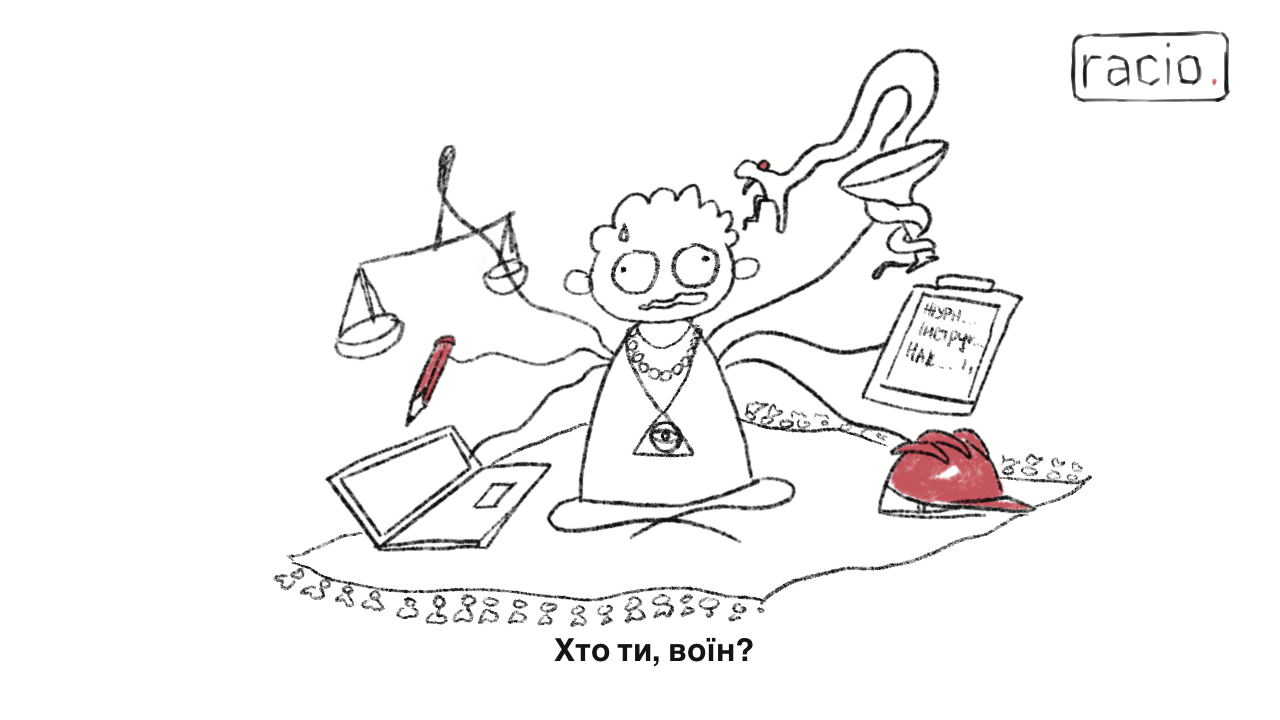
The portrait of a modern occupational health and safety specialist, let’s call it that, looks quite different. Briefly describing who a modern occupational health and safety engineer is, we can say that this is a person who helps make work safe and comfortable by combining many roles: project manager, risk manager, lawyer, technical specialist, communicator, and psychologist. And all this in one person.
Before describing what exactly this person does at the enterprise, let’s understand who needs an occupational health and safety engineer in general.
Let’s start with the Law of Ukraine on Labor Protection, Article 15, where the following lines can be found:
1. An enterprise with 50 or more employees must have a labor protection department (OHS department).
2. At an enterprise with fewer than 50 employees, the functions of the occupational health and safety service may be performed by part-time employees who have the appropriate knowledge.
3. If the company employs less than 20 people, third-party specialists with appropriate training may be engaged on a contractual basis to perform the functions of the occupational health and safety service.
Since even 1 employee is already an enterprise that has “less than 20 people” in accordance with the requirements of the Law, an occupational safety and health service is required there. And it doesn’t matter if it’s a production facility or a small IT gallery, beauty salon or fitness center. Any company that uses hired labor must have some form of “Labor protection department”.
What should this service look like and how many engineers should it have?
There is no specific answer to this in the Law of Ukraine on Occupational Safety and Health, nor in related bylaws. Therefore, let’s go up a notch and find in the Commercial Code Article 64 of the Commercial Code of Ukraine, which reads: “An enterprise independently determines its organizational structure, establishes the number of employees and staffing.”
With regard to occupational safety, the Law of Ukraine on Occupational Safety and Health has a somewhat similar interpretation: the employer ensures the functioning of the occupational safety and health management system, namely, creates relevant services and appoints officials who ensure the solution of specific occupational safetyand……
Since the law does not provide us with any other requirements and guidelines, each company can independently determine the number and structure of its own OHS service. And here we come to the most important issue, which has been the subject of 100500 million articles on accounting and legal forums – your occupational health and safety department can consist of any number of engineers working on any form of employment….., even at an enterprise with more than 50 employees. There is no direct prohibition on this in the Law. There is also no requirement to have a full-time engineer in the law. The only requirement is to create a service. Everything else is just someone’s imagination and interpretation.
So, the employer has determined who is who, prescribed the structure and now he has to develop a document called “Regulations on the Occupational Health and Safety Department”, which defines the composition of such a department and its functionality. And, of course, approve this document by order. And that’s it. That’s it.
So, we have figured out when an engineer and the service in general are needed, what it is and what it should consist of.
And what is the functionality of an occupational health and safety engineer?
1. Development of documentation.
One of the basic responsibilities of an engineer is to develop the necessary documentation to ensure compliance with legal requirements, which is the foundation of the entire employee safety management system. He or she monitors changes in legislation and adapts all documents in accordance with its requirements and the specifics of the enterprise. He makes sure that all documentation is implemented in work processes, and not just existed somewhere in the “space”.
2. Training and briefing of employees.
A modern occupational health and safety engineer organizes and conducts appropriate training and regular briefings for employees not only on occupational health and safety, but also on all safety issues. And here we are not talking about “crusts” or signatures in magazines, but about understanding all the processes that take place at the enterprise through the prism of safety and communicating about it with employees, contractors, visitors, and stakeholders.
3. Certification of workplaces (ARM) and medical examinations.
The engineer organizes periodic medical examinations of employees, determining who needs such check-ups and when, and analyzes the results to prevent occupational injuries. This process starts with an initiative: “We need to conduct an ARM!”, and then a number of events take place – from organizing the process as an operating procedure to the actual certification of workplaces, analysis of identified hazardous and harmful factors in the workplace, and ending with the improvement of working conditions and medical examinations.
4. Audit of the material and technical base of the enterprise.
Conducts a regular, or rather daily, audit of the state of labor protection, fire safety, and equipment, checking for safety and compliance with regulations. Based on the results, it assesses whether the company has all the necessary resources to ensure safe working conditions and what critical points of the system still exist today.
5. Defending the interests of the company.
The engineer not only acts as the first outpost on the way to the arrival of representatives of state authorities, but also constantly studies inspection and judicial practice in order to apply the most modern strategies for protecting and defending the interests of the employer. It helps to timely implement all necessary measures to reduce legal risks, fines, and lawsuits.
Of course, this list can be supplemented and is not exhaustive, but in our opinion, these are the main points that an occupational health and safety engineer should deal with.
An occupational health and safety engineer is a person who takes care of the “safety” part in all business processes of the enterprise.
Let’s try to establish a cause-and-effect relationship between the previous points and the efficiency of the enterprise.
First, it is to reduce legal risks.
Imagine that everything in the company works according to clear rules, like a well-oiled machine. Compliance with laws on labor protection, fire safety, civil defense, and even rules in case of emergencies (for example, during martial law) helps to avoid fines, lawsuits, and other problems. It’s the same when a CFO deals with the financial stability of the company, and an HR manager deals with business processes related to people. Everyone is doing their part to keep the company moving forward to achieve the company’s goals unhindered.
Secondly, it increases the company’s productivity.
A safe working environment is not just about helmets and signs. It is about a well-established, structured and safe risk management system. It means saved people, time, resources, profits, and a good night’s sleep for the manager.
Thirdly, it improves the company’s reputation.
When a company cares about the safety of its employees, it contributes to the formation of a positive image of the company at all levels. A small puzzle in a large system, the presence of which is often invisible, but the absence of which can destroy the whole picture.
So, an occupational safety and health engineer is not an extra expense, but an investment in the stability and development of the company.
If you are wondering whether you need an engineer or are tired of looking for an HSE engineer or your HSE engineer does not do these things, we offer to outsource all your labor protection, fire safety, and civil protection to us.
What does it mean? It is the fulfillment of all these points, not by one engineer, but by a whole team, you can read more about the benefits in our article Occupational Health and Safety Outsourcing: What it is, when and who needs it. And if you don’t have time to read it, just call us, we’ll tell you and show you everything.

Kateryna Grimovych
Occupational health and safety engineer