
In occupational safety, maintaining dedicated logs is not just bureaucratic formality — it is a core element of a company’s safety system. These logs serve several critical functions:
- they record actions that ensure safe working conditions;
- they demonstrate compliance with legal requirements;
- they act as official evidence during labor inspections or accident investigations.
OHS logs are essentially documented proof that an employer fulfills their obligations to employees.
The legal obligation to keep such logs is governed by:
- the Labor Code of Ukraine;
- the Law of Ukraine “On Occupational Safety”;
- and a range of sector-specific regulations, instructions, and internal policies.
If, during an inspection, the company cannot present the OHS briefing log or if the log contains no records, this may become grounds for penalties.
Beyond the legal side, there is a practical one: in emergencies, properly maintained logs can protect both employee and employer interests. For example, in a workplace injury case, a signed briefing record may become key evidence in court.
Mandatory logs: full list
Every company — regardless of size or industry — must keep specific occupational safety logs. This is not optional; it is a legal requirement and also a practical tool for structuring safety processes.
Keeping logs helps to:
- organize training and briefing processes;
- document responsibility of designated persons;
- ensure transparency and accountability in OHS activities.
Table of mandatory logs that should be in place:
| Log name | Purpose | Responsible person | Storage location |
| Induction briefing log (OHS) | Records initial employee orientation on OHS requirements | Person responsible for induction briefing (usually OHS specialist) | OHS engineer’s office or HR department |
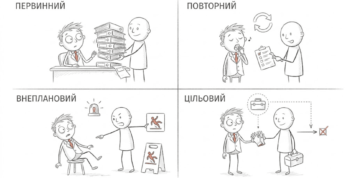
| Primary, refresher, unscheduled & targeted briefing log | Records on-the-job briefings | Direct supervisor (site/workshop/department head) | Workplace or supervisor’s office |
| OHS instruction register | Tracks active OHS instructions and their updates | OHS specialist | OHS department |
| OHS orders/prescriptions log | Records labor authority orders and tracks compliance | OHS specialist, legal team | Head of OHS service |
| PPE issuance log | Documents PPE handover to employees | Storekeeper / responsible person | Warehouse or OHS service |
| Medical examination log | Tracks mandatory employee medical exams | HR / medical unit | HR department or medical unit |
| Electrical installation clearance log | Records electrical safety clearance groups | Electrical safety responsible person | Energy department or OHS service |
| Firefighting equipment maintenance log | Records inspections/recharging/service of extinguishers | Fire safety responsible person | Fire safety unit |
Note: depending on the company’s specifics, the list may be expanded with specialized logs — for example, for explosive materials, robotics operations, construction sites, and more.
Briefing logs: differences and how to fill them in
Occupational safety briefings are a mandatory form of employee training aimed at preventing accidents and ensuring workplace safety. All types of briefings must be reflected in the relevant logs, and proper recordkeeping is essential for safe operations and the employer’s legal protection.
3.1. Induction briefing
An induction (introductory) OHS briefing is conducted for all employees upon hiring, as well as for pupils, students, and trainees before they start practical training.
Key points:
- conducted once at the start of employment;
- usually delivered by an OHS specialist or an authorized person;
- recorded in the induction briefing log.
Each entry should include:
- briefing date;
- trainee’s full name;
- position/profession;
- briefing program;
- instructor’s full name, position, and signature;
- employee signature.
Important: the log must be bound, numbered, signed by management, and stamped.
3.2. Primary / Refresher / Unscheduled / Targeted
These briefings are conducted directly at the workplace, taking into account the specifics of the work performed.
| Briefing type | When conducted |
| Primary | Before independent work, after induction |
| Refresher | Every 3 or 6 months depending on work type |
| Unscheduled | After legal/process changes, incidents, violations, new equipment |
| Targeted | Before one-time hazardous work or permit-to-work tasks |
All of these are recorded in one log — the workplace OHS briefing log. It is usually maintained by the employee’s direct supervisor (foreman, shift leader, etc.).
3.3. Typical log fields
The log should be standardized with clearly structured fields:
- briefing date;
- briefing type (induction, primary, refresher, etc.);
- trainee’s full name;
- position/profession;
- topic or brief content;
- instructor’s full name and position;
- trainee signature;
- instructor signature.
Recordkeeping mistakes (e.g., missing signatures or mixing up briefing types) can invalidate entries during inspections or accident investigations.
Knowledge, instruction, and permit logs
In addition to briefings, companies must document knowledge checks, maintain a register of active OHS instructions, and record permits for hazardous work. These logs help control employee awareness, compliance with safety requirements, and provide legal protection for the employer.
Knowledge checks: how they are documented
After training or briefings, employees must pass an OHS knowledge check. Results are recorded in the commission protocol and in a dedicated log.
What to record in the knowledge check log:
- check date;
- employee full name;
- position;
- type of check (periodic, after training, unscheduled);
- results (score, “passed”/“failed”);
- commission members;
- signatures of all parties.
If results are unsatisfactory, the employee must complete retraining and pass a repeat check. The log proves that this took place.
Register of occupational safety instructions
Every company has a set of occupational safety instructions — by job roles, work types, and equipment. To control their availability and updates, a register (log) of OHS instructions is maintained.
The register records:
- instruction title;
- approval number and date;
- approved by (position, full name);
- review/update due date;
- signature of the person responsible for keeping it up to date.
This register must be kept current: instructions should be updated at least every 3–5 years or whenever needed (changes in law, technologies, processes, etc.).
Permit-to-work: what it is and how to record it
For high-risk work (e.g., work at height, welding, electrical work), a permit-to-work is mandatory. It is a special document that authorizes such work only after all safety measures have been implemented.
This is recorded in a permit-to-work log, which should include:
- permit number;
- type of work;
- date and time of issue and closure;
- responsible persons;
- names of performers;
- safety measures completed.
This is especially important in manufacturing, warehouses, and construction — where risky work must not be performed without proper authorization.
Specialized logs: PPE, medical exams, electrical safety, fire safety
In addition to basic logs, companies often must keep specialized logs depending on their activities, hazard factors, equipment, and headcount. These documents help ensure continuity of OHS processes and prepare for inspections by the labor authority, fire service, and other bodies.
PPE issuance log
Mandatory for all companies where employees use personal protective equipment — helmets, gloves, respirators, protective clothing, etc.
Records typically include:
- employee full name;
- position;
- PPE item name;
- date issued;
- service/use period;
- employee signature (received);
- storekeeper/responsible person signature.
In practice, the log also records PPE returns (upon dismissal or when unfit) and replacements.
Medical examination log
Required for companies where employees must undergo mandatory pre-employment and periodic medical exams (drivers, loaders, hazardous production workers, night shifts, etc.).
Entries include:
- employee full name;
- position;
- exam date;
- doctor’s conclusion (fit / unfit);
- next exam date;
- signatures.
Missing this log or overdue medical exams can result in work prohibition and fines.
Electrical installations clearance log
For anyone working with electrical installations, the electrical safety rules require a clearance log indicating the electrical safety group (II–V).
Records include:
- full name;
- position;
- knowledge check protocol;
- assigned group;
- signature of the commission chair.
This log is critical for electricians, power engineers, and technical staff and must be kept by the electrical safety responsible person.
Fire extinguishers and primary firefighting equipment maintenance log
Important for all companies that have primary firefighting equipment — extinguishers, fire boards, hoses, alarm systems, etc.
The log includes:
- equipment location;
- extinguisher type and model;
- serial number;
- inspection/recharge date;
- responsible person;
- signature.
During inspections, the fire service typically requests this log and maintenance documentation.
Formatting requirements
Proper formatting of logs is just as important as keeping the records themselves. Even if entries exist, but the log is not bound or lacks the manager’s signature, it may be rejected during an inspection.
Key requirements
Page numbering
All pages must be numbered manually (or automatically, but with no gaps). This prevents adding pages or inserting entries retroactively.
Binding and fastening
The log is stitched with thread. On the back, a label is attached stating: “Total __ pages stitched and numbered,” with the manager’s signature and the company stamp.
Signature and stamp
Mandatory:
- signature of the company director/manager;
- company stamp;
- information about the person responsible for maintaining the log (usually on the first page).
Corrections
It is prohibited to cross out heavily, paint over, or use correction fluid (“white-out”).
Proper correction: one line through the incorrect text, note “Corrected to be valid,” plus signature and date.
Retention periods
- briefing logs — at least 5 years after the last entry;
- electrical safety, fire safety, PPE logs — depending on specifics, but at least 3–5 years;
- medical exam records — up to 50 years (for harmful working conditions).
Electronic logs: when appropriate and how to legalize them
With business digitalization, more companies are moving to electronic OHS logs. This is convenient, reduces administrative workload, and minimizes human error. However, the process must be legal and compliant with regulatory requirements.
When can you switch to electronic logs?
An electronic format is acceptable if the company:
- has an approved internal policy for electronic OHS document management;
- ensures user identification and authentication (login/password, qualified e-signature);
- guarantees personal data protection in line with the Law of Ukraine “On Personal Data Protection”;
- has backups and a secure data storage system.
Electronic logs are especially relevant for companies with many employees, multiple branches, remote sites, or high document turnover.
What is required to legalize an electronic log:
- a company order introducing the electronic format;
- a procedure/policy for maintaining and storing electronic logs (including responsible persons);
- a qualified electronic signature (QES/KЕП) for both the instructor and the employee;
- change control tools (audit trail/logging of every action: entry, viewing, editing);
- a backup system;
- access restricted to authorized users with role-based permissions.
Important: during inspections, authorities may request an exported or printed version of the logs with proof of authenticity (QES signature, hash/audit log).
Common mistakes and how to avoid them
Despite the seemingly simple nature of logkeeping, companies often make mistakes that can result in fines, disqualification of responsible persons, and even suspension of operations.
Most common mistakes:
- Missing employee or instructor signatures — the entry is considered invalid.
- Backdated briefings — easy to detect during inspections; this is a violation and a sign of falsification.
- No log available at the workplace — briefings “exist” on paper, but the log is not presented → fine.
- Log is not bound / not stamped / not numbered → treated as an unofficial document.
- All briefing types recorded in one log — e.g., induction, primary, and targeted all in one book; this violates recordkeeping rules.
- No registers for instructions and permits — missing OHS instruction register or permit-to-work log.
- Vague or unclear briefing topics — no specifics; it’s impossible to see whether the topic matches workplace risks.
- Incorrect corrections — heavy crossing-out, correction fluid, or missing notes are often treated as attempts to falsify records.
How to avoid issues:
- create a clear guideline for department heads on how to keep logs and what to record;
- appoint responsible persons to review logs monthly;
- train foremen, team leads, and HR who are authorized to keep logs;
- conduct periodic internal audits of OHS logs;
- move to electronic logs with automatic audit trails.
Templates and checklists
To simplify recordkeeping, it’s best to use ready-made log templates adapted to the company’s specifics. This helps avoid confusion, speeds up completion, and ensures compliance.
Mandatory log templates (standard forms)
Below is a list of logs recommended for every company, with references to typical forms:
| Log name | Standard template available | Where to find |
| Induction OHS briefing log | ✅ | Annex 5 to the Standard Regulation on OHS training and knowledge checks |
| Workplace OHS briefing log (primary/refresher/unscheduled/targeted) | ✅ | Annex 6 to the Standard Regulation on OHS training and knowledge checks |
| OHS instruction register | ✅ | Annex 4 to the Regulation on developing OHS instructions |
| PPE issuance log | ✅ | |
| OHS knowledge check log | ✅ | Annex 1 to the Standard Regulation on OHS training and knowledge checks |
| Permit-to-work log | ✅ | Form defined for the specific work type |
| Medical exams log | ✅ | Can be created based on MoH Order No. 1353 |
| Electrical safety clearance log | ✅ | Electrical installation safety rules |
Conclusions
OHS logs are not only a mandatory inspection attribute — they are a real tool for managing safety at a company. Proper logkeeping:
- increases transparency across all levels;
- reduces legal risk for management;
- ensures control of training and work clearances;
- proves compliance with legal requirements.
In practice, over 60% of labor authority fines are linked to logkeeping violations. Avoiding these issues is absolutely achievable.
Q&A (FAQ)
Can paper logs be replaced with electronic ones?
Yes, if local policies regulate it, QES/audit logging and record retention are ensured; for some inspections, a paper backup is still advisable.
Who is responsible for maintaining briefing logs?
Induction — OHS engineer/authorized person; others — the direct supervisor (foreman/section head).
How long should logs be stored?
Depends on the log type: usually 3–5 years; accident-related records are stored longer. Retention is defined in the company records schedule.
How do you correct a mistake in a log?
Cross out neatly, add “Corrected to be valid,” date, and signature. Correction fluid or tearing out pages is prohibited.
Do contractors need a separate log?
Yes. Contractor briefings/permits are recorded separately or in dedicated sections.