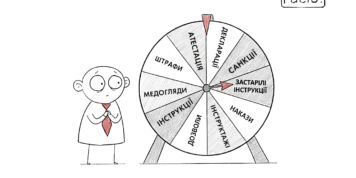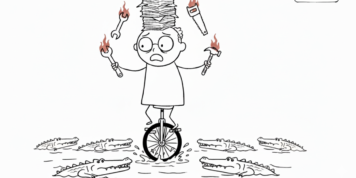

When a company has OHS in place, management needs to understand one thing: does the system actually reduce risk, or does it simply “live in folders”? OHS quality is not measured by the number of instructions, but by how quickly hazards are identified, how well people are trained, and how incidents are handled. The Racio team provides practical criteria, a set of KPIs, and a checklist that helps you evaluate the situation within a week — even if OHS is outsourced.
What “high-quality OHS performance” means
In simple terms, quality equals predictability and control. First: risks are known — they are not “discovered by accident” after an incident. Second: rules are followed on the shop floor, not only on paper. Third: there is an improvement cycle — a problem is spotted, analyzed, fixed, and then verified again.
Why “paperwork ≠ quality”? Because documentation without implementation does not change behavior. In practice, we often see the same pattern: logs look perfect, but warehouse aisles are blocked, a new employee doesn’t know the evacuation route, and PPE is “somewhere in the storage area.” That’s no longer a formality — it’s a real downtime risk and a management responsibility issue.
Factors that influence the quality of an OHS function
1) Management support and resources
An OHS function cannot “carry safety on its own” if leadership doesn’t provide resources and authority. It’s not only about budget. It’s the right to stop unsafe work, demand corrective actions, assign tasks to department heads, and get timely responses. If a production or warehouse manager ignores OHS feedback, the system collapses — even with strong specialists and well-written instructions.
2) Competence of the specialist or team
Competence is not “knowing regulations by heart,” but being able to apply them to real operations. A good specialist understands process risks, can assess workplaces, explain requirements to supervisors in plain language, and avoids inflating documentation to 300 pages where no one can find anything.
3) Safety culture in departments
Safety culture is the habit of doing things correctly even when “no one is watching.” It grows through simple things: a shift leader’s example, fast response to hazards, and normal communication without hunting for someone to blame. If bypassing PPE or safety lockouts is “normal,” OHS becomes a firefighting team constantly dealing with consequences.
4) Processes: risks → training → control → corrective action
The effectiveness of an OHS management system is visible in its processes. Risks are identified and recorded. Training is planned and delivered. Control exists — walkthroughs, internal audits, contractor checks. Corrective actions are assigned with owners and deadlines. If one link breaks, quality drops: for example, risks are documented, but no one verifies whether measures are actually implemented.
5) Documents and their relevance
Documents are necessary, but they must be “alive”: aligned with your roles, equipment, technologies, and real employee routes. The most common issue is copy-pasted templates that don’t match reality. As a result, employees don’t read them, and management cannot prove the rules were truly implemented.
6) Communication with HR, managers, and operations
OHS is a team sport. HR supports onboarding, training schedules, and medical checks. Line managers ensure execution on site. OHS coordinates, monitors, and advises on safer ways to work. If communication looks like “we sent a file — figure it out,” service quality will be low even with a strong specialist.
OHS KPIs
KPIs are not “punitive math” — they help you see the trend: is safety improving and becoming more controllable? Below are examples of metrics you can launch in 2–4 weeks and maintain without excessive bureaucracy.
Metric | How to calculate | Benchmark / target | How to influence it |
% of employees with up-to-date briefings | Employees with valid records / total employees | 95–100% | Schedule plan, line-manager control, HR reminders |
Number of incidents and near-misses | Recorded events per month | Downward trend, but not “zero silence” | Reporting channel, no-blame reporting culture, fast response |
% of corrective actions completed | Completed on time / total assigned | 80–90%+ | Clear deadlines, owners, small tasks instead of “fix everything” |
Response time to a hazard | From report to risk control | 24–72 hours depending on risk | Prioritization, stop-work authority, запас PPE/signage |
Share of updated instructions and orders | Updated per plan / total in the list | 100% per year or after changes | Annual review schedule, control of equipment/process changes |
How to check OHS quality in 1 week (checklist)
This checklist works both for an in-house team and an outsourced provider. The key is not to “check folders,” but to spot gaps between documentation and reality.
- Documents, logs, internal orders. There is a clear list, responsibilities are assigned, dates are current, signatures make sense. Review 3–5 random instructions: do they match real work activities?
- Proof of briefings in practice. Pick 5 employees and ask 2–3 simple questions: where is PPE, what to do in case of injury, where to report a hazard. If they don’t know, a signature in a log is meaningless.
- Workplace walkthroughs and audits. There is a schedule, photo evidence, short reports, a list of findings and actions. If walkthroughs happen only “when someone remembers,” control is weak.
- Risk register and corrective actions. At least in a simple table: risk, consequence, control, owner, deadline. Check whether actions are completed — not just written down.
- Medical checks and PPE (if applicable). There is a position list, schedule, issuance records, and actual use. In a warehouse, you can verify this in 30 seconds.
Common mistakes that make an OHS function “not work”
These issues repeat across industries because they are organizational, not technical.
- Formalism. Documents are prepared “for inspections,” but processes are not implemented.
- No responsible persons in departments. OHS has no “eyes and hands” on the floor, so rules don’t reach people.
- No post-audit action plan. Findings are identified — then silence. A month later, everything is the same.
- Briefings “for signatures.” A new hire signs and is sent to work. That’s how incidents happen.
What to do if quality is low
Honestly, the best way to raise quality is through short, specific steps. You don’t need to “rewrite the entire system” at once. Here’s a 30-day plan that delivers visible results:
- Rapid audit. 1–2 days: sites, risks, status of logs, critical gaps.
- Action plan with 10–15 tasks. No “improve everything.” Only what truly reduces risk: training, permits/authorizations, PPE, briefings, responsible persons.
- Training for department managers. Short and practical: how to run briefings, how to document them, how to respond to hazards.
- Weekly control. A 30–40 minute walkthrough + a list of corrective actions with deadlines.
- First KPIs. Start with two metrics: up-to-date briefings and corrective actions completion.
FAQ
Do you need an OHS function if you have fewer than 50 employees?
Yes, but the format depends on risk. In a small office, appointed responsible persons and basic processes may be enough. In a warehouse or manufacturing environment, requirements and risks can be much higher even with fewer people.
Who is ultimately responsible for results?
The employer. The OHS function, line managers, and employees are parts of the system, but final responsibility for organization and control lies with leadership.
How do you assess an outsourced OHS provider?
Ask for a transparent plan, an activity calendar, a report on risks and corrective actions, and metrics showing response to hazards. A strong provider doesn’t work as a “document package” — they work through process and communication.
How often should you run an internal audit?
For SMBs, 1–2 times per year is usually enough, plus checks after process changes, new equipment launch, or an incident.
The Racio team can conduct an OHS audit
If you want to confirm your system actually works — not just exists “for show” — start with an assessment. The Racio team can audit your OHS system, evaluate performance, and provide a 30-day improvement plan with clear priorities — so you understand what drives results and where you can reduce risk fastest.