
In 2024, the area of warehouse facilities in Ukraine has nearly doubled compared to the pre-war period. This dynamic indicates active market growth even under current conditions.
A warehouse is not just a place to store, it is a full-fledged workspace. Therefore, occupational safety in such facilities is as essential as in offices. However, can warehouse safety standards be equated to those for office spaces? Partially—yes. However, the peculiarities of warehouse work introduce more risks and specific requirements.
What occupational safety requirements should be taken into account for the safe operation of a warehouse?
Let’s consider this issue using the following example: a pharmaceutical company, Zdorovye LLC, which rents a small warehouse. The total number of employees is 25. Most of the staff is in the office. The warehouse staff consists of a manager, three storekeepers, and 1 forklift driver.
There is no single unified document that would contain all the requirements for warehouses in our legal field today. The basic regulatory act can be considered NPAPP 0.00-1.75-15 Rules of labor protection during loading and unloading operations. It regulates the general rules for performing such work, including the operation of forklifts and other warehouse equipment. However, these requirements are not exhaustive.
Therefore, for each type of equipment used in a warehouse, you should additionally search for individual NPAPs in the index of regulatory acts. For example, despite the fact that the previous NPAPP contains requirements for forklifts in warehouses, there is a separate NPAPP 0.00-1.83-18 Rules of labor protection during the operation of forklifts. Similarly, the use of ladders and stepladders is described in more detail in NPAS 0.00-1.15-07 Rules of labor protection during work at height and in NPAS 0.00-1.71-13 Rules of labor protection during work with tools and devices.
Thus, the warehouse occupational health and safety system will consist of the following elements:
І. Documentation on labor protection. As in any enterprise or warehouse, everything starts with internal documentation. It should consist of the following blocks:
1. Regulations – which describe all the elements of labor protection management, usually they are developed on the basis of standard regulations. This is a kind of company policy regarding certain management processes for OHS at the enterprise.
The main ones are as follows:
- Regulations on the Occupational Health and Safety Management System,
- Regulations on the Occupational Health and Safety Service,
- Regulations on the Procedure for Conducting Training and Testing of Knowledge on Occupational Health and Safety,
- Regulations on the activities of persons authorized by employees on occupational safety and health,
- Procedure for issuing PPE.
Of course, this list is not exhaustive and may be supplemented by other provisions, for example: Regulations on the energy service (if any), Regulations on the procedure for organizing and conducting medical examinations, the procedure for issuing work permits, various types of training programs, etc.
2. Labor protection instructions. There are two types: for employees of specific professions or when performing certain work.
What could the list of necessary instructions look like for our Zdorovye LLC? Since our warehouse employs storekeepers, a forklift driver, and office workers, we will receive the following list of instructions:
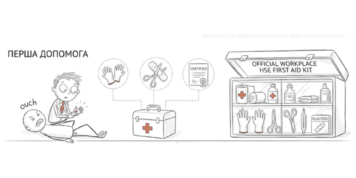
- On providing first aid to people in case of emergency;
- On general issues related to Group I electrical safety;
- For users of screen devices;
- For the head of the pharmacy warehouse;
- During loading and unloading operations;
- For the storekeeper;
- For a forklift driver.
If there was no driver on the staff list and the forklift was operated by a trained storekeeper, we would need a separate instruction on the types of work – “When working with a forklift”. This approach provides greater flexibility in the use of equipment and expands the list of employees who are authorized to operate it. Employees who have been instructed in accordance with this manual and have completed all mandatory procedures (including training, medical examinations, etc.) may use the forklift without hindrance. There is no need to make changes to their basic occupational safety and health instructions, which optimizes the organization of processes and contributes to the efficient performance of work.
3. Orders – enact local documents, such as regulations and instructions, and appoint those responsible, for example, for the technical condition and safe operation of equipment or for occupational safety in general.
The minimum set of necessary orders for a company with a warehouse is as follows:
- Approval of the Occupational Health and Safety Regulations;
- On the establishment of the Labor Protection Service;
- On the organization of work on labor protection;
- On approval of labor protection instructions;
- On approval of the list of high-risk jobs and jobs requiring professional selection;
- On establishing a commission to test knowledge on labor protection issues;
- Appointment of a person responsible for the condition of equipment; for the safe performance of work (the requirement to appoint a responsible person is usually stipulated in the relevant NPAS);
- Approval of standards for the issuance of PPE;
- On the organization of medical examinations;
- Approval of the schedule of rack inspection, etc.
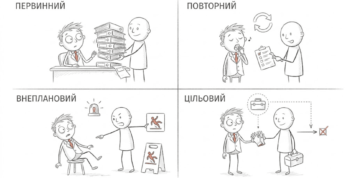
ІІ. Training and briefings. Upon hiring, all employees receive introductory and initial occupational health and safety briefings, and are refreshed every 3 or 6 months. For employees performing high-risk work, such as forklift drivers or loading and unloading operations, the training is 3 months, while all other employees receive refresher training once every 6 months. Also, newly hired forklift drivers must undergo an internship if they do not have the appropriate training. All briefings and internships must be recorded in the training logs. You can read how to conduct on-the-job training here.
Training is not the only knowledge you need to acquire.
Managers who are involved in the occupational health and safety system or who manage high-risk work must attend a training center every three years. In our example of Zdorovye LLC, the following lucky people have to undergo training:
- Director;
- Labor protection engineer;
- Warehouse manager.
Employees who perform high-risk work also undergo separate training, but they do so every year. In our warehouse, this includes all those who perform loading and unloading operations or work on ladders.
ІІІ. Workplace Certification and Medical Examinations. Both workplace certification and medical examinations are mandatory at any enterprise, regardless of ownership or operational form. Workplace certification (ARW) must be conducted to assess work conditions. Documentation requirements for ARW can be reviewed in our article.
Medical examinations (ME) are crucial for determining employee fitness for work. Employers must ensure medical examinations for “specific categories” of employees, covering all costs as mandated by Article 17 of the Law of Ukraine on Occupational Safety. Details on who needs medical examinations are available here.
IV. Permits and Documentation. Permits are divided into two types: licenses and declarations. They apply to equipment or types of work. For this example, the following permits are required:
- A declaration for operating high-risk equipment (electric forklift).
- A permit for high-risk work (loading and unloading operations involving machines and mechanisms).
Note: During martial law, a permit can be substituted with a declaration for loading and unloading operations. This is simpler and significantly cheaper.
V. Provision of Special Clothing, Footwear, and Other Personal Protective Equipment (PPE). In addition to documentation, warehouse employees must be provided with PPE. Information on how to select PPE and the necessary documentation for it can be found in our article.
If you’re short on time, here is a brief list of PPE required for warehouse staff:
| Forklift Driver | Spring/Summer: |
| Warehouse Manager | Spring/Summer: |
| Storekeeper, senior storekeeper, or warehouse clerk | Spring/Summer: Lightweight jacket Lightweight coveralls Steel-toe boots T-shirt Winter Season: Warm jacket Insulated coveralls Winter hat Steel-toe boots |
VI. Equipment Documentation. Specific requirements also apply to warehouse equipment. These include:
- Availability of passports,
- Technical documentation for equipment,
- Records of technical inspections,
- Periodic testing,
- Depending on the equipment type and legal requirements, the equipment must also be registered.
While the list of documentation requirements for equipment is extensive, it does not cover all nuances related to maintaining and handling technical documentation. Nevertheless, these requirements are essential for most warehouse equipment types.
To ensure compliance, regular occupational safety audits are recommended. Guidance on conducting such audits can be found here.
If you want to establish or verify your occupational safety system, contact us — we will help implement comprehensive solutions tailored to your enterprise.

Kateryna Grimovych
Occupational health and safety engineer