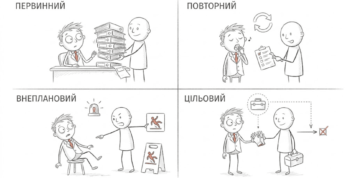
An OHS audit is a comprehensive review of how your safety system actually works in practice — from documents and training to real workplace conditions. A full audit helps identify where risks exist, which non-compliances may lead to fines or incidents, and what should be fixed first. As an outcome, the business gets a clear report and a practical action plan — not just comments, but a roadmap for change.
What a “full” OHS audit means
A full-format OHS audit is a systematic analysis of how occupational safety is organized at the enterprise, whether processes meet legal requirements, and whether rules are followed in real life.
It’s important to distinguish audit formats. A quick audit or a spot check usually assesses only one area — for example, documentation or inspection readiness. A full OHS audit covers three core components:
- documentation and compliance with regulatory requirements;
- safety management processes and the training system;
- real workplace conditions and rule implementation.
That’s why this format provides a more objective picture. In practice, a comprehensive OHS audit often reveals systemic issues that a superficial review cannot detect.
Who needs a full audit — and when
Companies typically order an OHS audit during periods of change or elevated risk. It’s not only about preparing for inspections — it’s also a way to understand the real state of the safety system.
Common scenarios where a full audit is especially relevant:
- before a regulatory inspection;
- after an incident or workplace accident;
- when launching a new facility or production site;
- during company scaling or opening new locations;
- when the OHS system exists only “for signatures.”
In many businesses, a full OHS audit becomes the starting point for building a real safety management system. After the review, it becomes clear which processes must be created or restarted.
What a full audit includes (scope of work)
Documentation
The first block is documentation. Auditors review whether required orders, policies, instructions, briefing logs, training programs, and other mandatory documents exist and are up to date.
The key is not only whether documents exist, but whether they reflect real company processes. A common finding is that instructions haven’t been updated for years or don’t match actual working conditions.
Training and briefings
The second block is personnel readiness. A comprehensive OHS audit checks whether briefings are conducted, training evidence exists, and knowledge checks are performed.
A typical issue is purely formal briefings: signatures are present, but employees don’t know what to do in a hazardous situation or emergency.
Risk assessment and OHSMS
Modern workplace safety relies on a risk-based approach. That’s why an audit assesses whether a risk register exists, how the company identifies hazards, and whether corrective actions are implemented.
In a mature OHS management system, a continuous improvement plan is created after every incident or audit. Without such a mechanism, the system doesn’t truly function.
Workplace inspection
No OHS audit is limited to paperwork. Specialists evaluate real working conditions: workplace status, process organization, and PPE use.
During on-site inspections, auditors often find hazards that documents don’t show: blocked evacuation routes, faulty equipment, missing signage, or отсутствующие protective measures.
Fire safety and electrical safety
In many companies, the audit also covers related areas. A comprehensive OHS audit may include a baseline review of fire safety, electrical safety management, evacuation plans, and primary firefighting equipment.
How the audit works (stages)
To deliver practical outcomes, an OHS audit is carried out in stages. This structure helps build a complete picture and set the right priorities.
- Briefing and data collection — reviewing company structure, headcount, activities, and sites.
- Document review — checking internal policies, orders, instructions, and logs.
- Site inspection — reviewing workplaces and operational processes.
- Non-compliance mapping — identifying violations and risks.
- Report and corrective plan — preparing recommendations and defining priority actions.
As a result, a full OHS audit becomes not a formal check, but a risk management tool.
Outcome: what the client receives
After the review, the company receives a structured result. A full OHS audit ends with a report that includes:
- a list of non-compliances and potential risks;
- references to relevant regulatory requirements;
- recommendations on how to address issues;
- an action plan with priorities.
Actions are typically grouped into three categories:
- critical — must be fixed immediately;
- medium priority — should be addressed soon;
- long-term — systemic improvements or process optimization.
Timing and cost (what they depend on)
Duration and cost can vary significantly. A full OHS audit depends on:
- number of employees;
- type of business activity;
- number of locations or production sites;
- presence of high-risk work;
- current state of documentation.
For example, a small office audit may take a few days, while a warehouse or manufacturing audit may take longer due to process complexity.
Checklist: what to prepare before starting
To make the audit faster, it helps to prepare basic information in advance:
- staff list or roles/positions list;
- company balance sheet/asset register (as applicable);
- existing OHS documents;
- briefing and training logs;
- results of previous inspections;
- list of high-risk works (if applicable).
This allows the audit to move quickly into analysis and focus on real risks.
Typical issues an audit reveals
In practice, comprehensive OHS audits most often uncover similar problems:
- briefings are purely formal;
- instructions haven’t been updated for years;
- there are no orders appointing responsible persons;
- logs are maintained incorrectly or not maintained at all;
- there is no corrective-action system after inspections.
These “small details” can become the biggest problems during an inspection or after an incident.
FAQ
How long does a full audit take?
It depends on company scale. For a small office it can take a few days; for production companies it may take from one to several weeks.
Can an audit be done partially remotely?
Documents can be reviewed remotely, but a full assessment requires on-site inspection of workplaces.
Is an audit suitable for small businesses?
Yes. Even small companies must meet legal OHS requirements. A full audit helps quickly identify which processes must be organized.
What should we do after the audit?
Implement the corrective action plan, assign owners, and set up regular control.
Order an OHS audit from a Racio expert
If you need to understand the real state of your safety system and prepare for inspections, the Racio team can scope the work, conduct an OHS audit, and provide a detailed corrective plan. A short consultation is enough to define the audit format and start putting your OHS system in order.