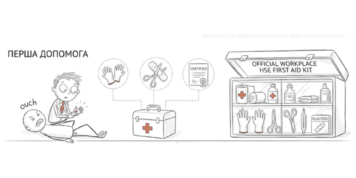

Employee medical examinations are not only a formal legal requirement — they are also an essential part of an occupational safety system at any company. They help identify occupational risks early, prevent diseases, and confirm that a person is physically and psychologically fit to perform their duties without harm to themselves or others.
This is especially relevant for higher-risk sectors such as manufacturing, construction, transport, healthcare, education, and the food industry. But even in a “standard” office environment, the employer should know when a medical exam is mandatory, how to organize it correctly, and what risks arise from non-compliance.
What mandatory medical exams are and why they matter
Mandatory employee medical exams are a set of preventive measures aimed at protecting staff health in conditions of occupational risk. Their organization is regulated by several legal acts, including:
- MoH Order No. 1393 dated 08.09.2025, “Procedure for Organizing and Conducting Mandatory Medical Examinations for Certain Categories of Employees.”
- MoH Order No. 280 dated 23.07.2002 — includes the list of harmful and hazardous factors that require mandatory medical exams.
- Labor Code (Art. 169) — obliges the employer to ensure safe working conditions, including through medical examinations.
- Law “On Occupational Safety” (Art. 17) — sets requirements for medical exams and liability for violations.
Key objectives of medical exams:
- assess the employee’s physical and psycho-emotional fitness for specific work;
- detect early signs of occupational diseases or exacerbation of chronic conditions;
- identify contraindications for certain types of work;
- ensure compliance with sanitary legislation and occupational safety standards.
Medical exams are not only about health — they also provide legal protection for the employer in the event of an accident or a labor inspection.
Who must undergo medical exams
Medical exams are not mandatory for all employees, but only for specific categories defined by regulations. The main condition is exposure to harmful or hazardous factors at the workplace, or performing work that may pose health risks.
Key categories required to undergo medical exams:
- employees exposed to harmful substances (chemical, biological, physical);
- employees working at height, with electrical equipment, in confined spaces, or on night shifts;
- staff in healthcare, education, and food service/food production;
- drivers and employees in transport, warehousing, and logistics;
- employees working at public facilities, interacting with children or food products;
- employees under the age of 21.
All these categories must be included in the so-called “contingent list” — an official document that defines which employees at the company are subject to medical examinations.
Types of medical examinations
There are several types of medical examinations, and each serves its own purpose within the occupational safety system. It’s important not to confuse them and to follow the required timelines.
3.1. Pre-employment medical exam
Conducted before hiring and mandatory for all roles included in the contingent list. The goal is to confirm the person is physically fit for the working conditions and has no contraindications.
3.2. Periodic medical exam
Conducted regularly according to a schedule, depending on the hazard factor or job role. The frequency is defined by Ministry of Health (MoH) orders. For example, night-shift workers — annually; chemical production — every 6 months.
3.3. Unscheduled (extraordinary) medical exam
Assigned in cases such as:
- an industrial accident or incident;
- health complaints;
- changes in working conditions;
- a recommendation from an occupational physician or a family doctor.
3.4. Additional examinations
Depending on the industry, additional checks may be required, such as:
- psychiatric assessment;
- narcological screening;
- fluorography / chest X-ray (especially in facilities with constant public presence);
- vaccination (in particular for healthcare and education staff).
Who pays and employer liability
Under Ukrainian law, all mandatory medical examinations are paid for by the employer. This is directly stated in Article 17 of the Law of Ukraine “On Occupational Safety” and clause 2.4 of the Medical Examination Procedure.
What this means in practice:
- the company signs a contract with a licensed medical facility;
- all costs related to medical exams (including lab tests and specialist consultations) are covered by the employer;
- employees cannot be sent for the exam at their own expense, even if they agree.
Consequences of non-compliance:
If an employee is allowed to work without a valid medical conclusion, this is a serious violation, and the employer may face:
- a fine of up to UAH 37,000 (under Article 265 of the Labor Code),
- suspension of business activities,
- liability in the event of an accident or occupational disease.
Important: an employee who has not passed a mandatory medical exam must be suspended from work without pay (clause 7.2 of MoH Order No. 246).
Step-by-step organization of medical exams in a company
To avoid chaos, missed deadlines, and fines, it is recommended to organize the process in stages and systematically. Below is a practical algorithm for HR or an OHS specialist:
5.1. Defining the contingent
Create a list of job positions and working conditions that fall under mandatory medical exams. To do this:
- analyze workplaces;
- identify harmful/hazardous factors;
- cross-check with the MoH List.
5.2. Contract with a healthcare provider
Choose a medical facility that has:
- a license to conduct occupational medical examinations;
- a commission including an occupational physician, therapist, ENT specialist, ophthalmologist, surgeon (depending on risk factors);
- the ability to perform tests on-site or through a partner laboratory.
Life hack: choose a provider with mobile teams or located near the company — it saves time and costs.
5.3. Order and employee referrals
After the contingent list is prepared, the manager issues an order to conduct medical exams, which:
- states the grounds (list of factors, MoH order);
- approves the schedule;
- appoints responsible persons (HR, OHS engineer);
- includes the list of employees and their roles.
Each employee receives a referral for the medical exam indicating working conditions and occupational hazard factors.
5.4. Completing the examinations
On the scheduled days, employees:
- undergo examinations by specialists (occupational physician, therapist, surgeon, etc.);
- take tests (depending on risks);
- receive fitness-for-work conclusions.
If contraindications are identified, the doctor may:
- recommend restrictions (no night shifts, no heavy loads);
- refer the employee for additional diagnostics.
5.5. Commission conclusions, final report (act)
The medical facility prepares a consolidated act/report in the MoH-approved format:
- list of employees and conclusions for each;
- signed by the doctors, the head of the medical facility, and a company representative.
5.6. Register, health records, clearance to work
HR or the OHS specialist:
- records the results in the medical exam log/register;
- stores personal medical records (with restricted access);
- prepares an order to allow employees to work or to suspend them (if needed).
5.7. Employer actions based on results
If restrictions are identified:
- the employee is transferred to safer working conditions;
- a repeat exam or consultation is initiated;
- OHS instructions are updated to reflect the new working conditions.
Documents and timelines: what you should have
To avoid chaos during inspections, it is important to maintain a complete set of documentation related to medical exams. Below is the basic list:
| Document | What it contains | Retention period |
| Medical exam order | Grounds, dates, contingent list, responsible persons | 5 years |
| Contingent list | Positions, risk factors | Updated annually |
| Exam schedule | Dates, employee sequence | Stored together with the order |
| Medical exam referral | Full name, position, working conditions, hazard factors | Up to 5 years |
| Individual conclusions | Fitness conclusion, restrictions | Stored in HR/medical file |
| Final act/report | Overall commission results | 5 years |
| Medical exam log/register | Date, employee, result | Permanent or until company liquidation |
Compliance with retention periods and confidentiality is mandatory.
Common mistakes and how to avoid them
Organizing medical examinations in a company may seem like a formality—until an inspection happens or an accident occurs. In practice, businesses most often face the following mistakes:
- Incorrect contingent list. Employees exposed to risks are not included (for example, office staff working at a PC for more than 4 hours a day), or, on the contrary, employees are added even though medical exams are not mandatory for them.
- Missing or outdated referrals. Referrals often do not reflect the real working conditions or do not list hazard factors, so the medical commission cannot assess risks properly.
- Expired or irrelevant schedules. Schedules are not updated annually or not communicated to employees, which leads to missed exams.
- No final act/report or medical exam log. This is the most common violation that results in an order to remedy or a fine from the labor authority. Without the final act, there is no legal proof that employees completed the exams.
- Violations in personal data handling. Medical conclusions are not properly protected and confidentiality is not ensured. This is not only an OHS issue—it also creates liability related to personal data processing.
To avoid problems, build a yearly review routine for every step, keep templates up to date, and treat each document responsibly.
Useful templates and checklists
To simplify the work for HR specialists, OHS engineers, and managers, it’s worth creating a set of internal templates for each stage of medical exam organization.
Recommended set:
- a sample medical exam order — with dates, risk factors, and responsible persons;
- a standardized employee referral form — with hazard factors based on the role;
- a sample contingent list — a table with full name, position, working conditions, and legal grounds;
- a medical exam schedule template — broken down by departments or categories;
- a medical exam log/register template — a table for results and signatures;
- a sample final act/report from the medical provider — for archiving at the company.
Start-of-year checklist for HR/OHS:
- update the contingent list;
- verify an active contract with a healthcare provider;
- approve the medical exam schedule;
- issue referrals;
- track completion and collect results on time.
These documents can be adapted to the company’s specifics and stored electronically with restricted access.
Final thoughts
Employee medical examinations are not just a duty written in regulations. They are a real tool to protect employees’ life, health, and rights—and a foundation for safe business operations. Timely organization of medical exams helps:
- prevent workplace injuries and illnesses;
- avoid fines and orders from controlling authorities;
- prove proper fulfillment of employer obligations in the event of incidents;
- ensure only fit employees are admitted to work.
This process requires coordinated work from HR, management, OHS specialists, and accounting. The key to success is consistency: up-to-date schedules, a complete document package, deadline control, and transparent actions when medical restrictions apply.
Don’t postpone medical exams—delays can be very costly.
Need help organizing medical exams, auditing documents, or getting templates? The Racio.ua team provides full support—from defining the contingent to setting up internal procedures and preparing the company for inspections.
Contact us and get a ready-to-use solution without risks and fines.
Questions & Answers (FAQ)
Who must undergo medical exams?
Employees whose work involves harmful/hazardous factors or increased responsibility (manufacturing, construction, electrical installations, work at height, food industry, laboratories, etc.).
What is the difference between pre-employment and periodic exams?
Pre-employment exams are done before hiring to confirm fitness; periodic exams are done regularly under an approved schedule to monitor health during employment.
Who pays for the medical exam?
The employer covers the cost under a contract with a healthcare provider.
What happens if an employee does not pass a mandatory medical exam?
The employer must suspend the employee from work without pay until the exam is completed; fines may apply.
What documents does the medical commission issue?
An individual conclusion (fit / fit with restrictions / unfit) and a final act/report for the company, which serves as the basis for work clearance or restrictions.