Workplace fire safety is not “something only for manufacturing” — it’s a basic need for any office, warehouse, or service location. One faulty socket, a blocked emergency exit, or boxes placed “temporarily” in a corridor can cost a company a lot. The Racio team explains fire safety basics in plain language: regulations, responsibilities, fire safety regime, briefings, firefighting equipment, evacuation plans, and action steps.
What fire safety is
Fire safety is a system of organizational and technical measures with three goals: prevent ignition, minimize risks and consequences, and protect people and property. This is what fire safety in practice means: not waiting for an incident, but managing causes and likely scenarios.
It’s important to distinguish terms. Fire prevention is a set of actions taken BEFORE a fire (inspections, removing combustible materials, electrical checks). Fire safety measures are broader — they include prevention and readiness to respond DURING a fire (evacuation, extinguishers, alarm/notification).
Regulatory framework in Ukraine
To avoid a “waterfall of documents,” here’s a short list of what requirements typically rely on:
- Fire Safety Rules in Ukraine approved by an order of the Ministry of Internal Affairs (the current version was updated in 2024). This is the key document referenced when establishing a fire safety regime and during inspections.
- The Civil Protection Code of Ukraine — sets general obligations for businesses regarding fires and emergencies.
- DSTU and DBN standards with terms and definitions (including evacuation route requirements and evacuation plan design).
For businesses, the logic is simple: there are fire safety norms as a framework, and then you adapt them to your specific site — premises, people, equipment, working hours, and risks.
Who is responsible for fire safety at a company
This question has two layers. First is the overall responsibility of the owner or director. Second is the appointed on-site responsible persons who actually control implementation of the required measures.
Typically, companies do the following:
- issue an internal order and appoint a fire safety responsible person for the site or department;
- define responsibility zones (warehouse, office, server room, workshop) and display signs;
- закрепляют these duties in job descriptions.
This matters for both operations and inspections: when a fire safety responsible person is appointed, it is clear who maintains logs, controls extinguisher inspections, monitors evacuation routes, and organizes briefings.
Fire safety regime: what must be organized?
A fire safety regime is a set of day-to-day rules on the premises. These are the core fire safety requirements that inspections actually check:
- Evacuation routes. Corridors, stairwells, and emergency exits must be kept clear. Boxes placed “for 15 minutes” often stay for a week — and during a fire, those minutes are the most expensive ones.
- Designated smoking areas. Smoking must be limited to clearly designated places with bins/ashtrays. Improvised “corners” near a warehouse — especially next to cardboard or pallets — add unnecessary risk.
- Open flames and heating appliances. You need clear rules for heaters, extension cords, kettles/boilers, and a ban on “DIY solutions.” This is especially critical for warehouses, because electrical issues are a common cause of fires.
- Hot work / fire-hazardous operations. Welding, metal cutting, working with bitumen or gas must follow an established procedure (permits, area control, firefighting readiness).
- Combustible waste and housekeeping. Cardboard, plastic film, sawdust, and oily rags must be collected and removed according to a procedure. Waste piled in a corner is a small thing that often becomes a big risk factor.
- End-of-shift premises check. Closing a shift should include a quick check: are devices switched off, is there overheating, are routes clear? It’s a simple habit — and a best practice that can “save the site at night.”
- Fire action procedure + evacuation plan. Every employee must know who to call, where to go, and where the extinguisher is — not in theory, but in their specific building. This is what workplace fire safety measures mean in the most practical sense.
If you’ve seen the misspelled query “правила пожежнои безпеки,” it refers to the same thing — the regime rules that must be implemented and maintained.
Fire safety briefings and training
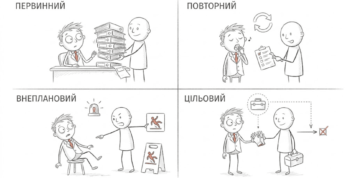
Fire safety briefings are needed so people act automatically, without panic. Induction is for newcomers, initial is at the workplace, refresher is regular, unscheduled is after changes or incidents, and targeted is for a specific task. Briefings are recorded in a logbook or (for remote staff) in another approved format — the key is proof and a clear logic.
A separate topic is training for designated officers on fire safety — for managers and responsible persons who must organize the regime and control, not just “know the evacuation route.” This training is delivered by specialized training centers and documented with official certificates.
Typical inspection failures: briefings exist only “for signatures,” employees can’t point to the emergency exit, all logs are filled in with the same handwriting, and the actual on-site fire safety regime contradicts the company’s own documents.
Primary firefighting equipment
Fire protection starts with the basics — fire extinguishers and fire stations/boards (where required). Most workplaces use powder and CO₂ extinguishers: powder units are more universal, while CO₂ is useful where cleanliness matters (for example, near electrical equipment).
The basic principles are simple:
- place extinguishers so they are accessible — without having to “unpack a warehouse pyramid of boxes”;
- register extinguishers and perform regular inspections (monthly) and maintenance (annually);
- keep documentation for each extinguisher (passport, instructions, certificate or conformity proof) and maintenance records.
These are the basic fire safety requirements that often “fail” because of small details: missing seal, overdue inspection, or an extinguisher hidden behind a rack.
Evacuation plans and alerting
A workplace fire evacuation plan is not a “decorative poster.” It shows exit routes, the locations of firefighting equipment, and how people should move. Standards describe an evacuation plan as a document with routes, exits, and rules of behavior and actions for staff.
What to check on site in practice:
- emergency exits open and are not blocked;
- clear signage is in place and, if required, emergency lighting works;
- routes do not pass through a “temporary storage area”;
- the alert/alarm system (if installed) is maintained and serviced.
When we talk about fire safety requirements for premises, this includes the usability of evacuation routes, accessibility of exits, and the absence of obstacles along the routes.
Actions in case of fire
Employee actions
If a fire starts, simplicity matters. Here’s a short algorithm people can actually remember:
- immediately report the fire (to a manager/responsible person) and call the fire and rescue service (101);
- if possible, warn people nearby and begin evacuation;
- if it is safe, try to extinguish the fire using primary firefighting equipment;
- do not use elevators; follow the evacuation route;
- at the assembly point, check in with the responsible person.
Actions of the responsible person / officer
For responsible persons, the key is managing evacuation and coordination:
- activate the alert system, organize evacuation, and check “problem areas” (restrooms, storage rooms);
- if possible, switch off power/ventilation according to procedure;
- meet emergency services and provide information: what is burning, where people are, where hazardous substances are;
- organize headcount at the assembly point and report any missing persons.
This is often documented as a “Procedure and action plan for staff in case of fire at the workplace” — so people don’t improvise under stress.
Company checklist
This list helps you quickly see whether fire safety “actually works.” Go through it once now and repeat quarterly.
- A responsible person is appointed; there is an official order and defined responsibility zones.
- A fire safety compliance declaration (to the emergency authority) is in place for the facility.
- Current insulation resistance measurement reports are available.
- A fire safety regime is implemented (smoking rules, housekeeping, end-of-shift checks).
- Evacuation routes are clear; exits are accessible.
- An evacuation plan and clear signage are in place.
- Employees know where/how to report a fire.
- Briefings are conducted; logs exist; new hires complete induction.
- Fire extinguishers are in place, in date, accessible, recorded, and inspected.
- Electrical panels are not blocked; extension cords are not “snaking across the floor.”
- Combustible waste is removed regularly; no accumulation.
- Hot work is performed under a permit/authorization procedure.
- A short fire action algorithm exists for employees and for the responsible person.
- Contractors on site are briefed on the rules.
If for at least 3–4 items your answer is “I don’t know,” it’s worth strengthening the system — it’s cheaper than dealing with последствия later.
Frequently Asked Questions (FAQ)
Who appoints the responsible person?
The director or owner appoints them by an internal order. The appointed person then completes training at a certified training center and is responsible for organizing the fire safety regime, briefings, and on-site control.
How often should briefings be conducted?
It depends on the type of work and internal rules — typically once every 6 or 12 months. The key is that refresher briefings are done regularly, unscheduled briefings are held after changes or incidents, and everything is recorded in the log.
What do inspectors usually check?
Most commonly: the SES (State Emergency Service) declaration, appointment and training of responsible persons, evidence of briefings, evacuation routes, availability and condition of primary firefighting equipment, documentation, and the actual on-site implementation of requirements.
What if the premises are rented?
Renting does not mean “everything is on the landlord.” Some items may be on the landlord’s side (e.g., building-wide systems), but your business is responsible for the regime within your area: clear routes, briefings, waste handling, extinguisher accessibility, and staff actions. In practice, this is handled by allocating responsibilities in the lease agreement and internal orders.
When you need a specialist
In some situations it’s better not to “Google it in pieces,” but to run a proper assessment and create a work plan:
- you open a new office/warehouse/production site or change the layout of existing areas;
- hot work appears or there are many contractors on site;
- you expect an inspection or received an official order/notice;
- there was an incident: smoke, short circuit, etc.;
- it’s unclear how to combine OHS and fire safety into one manageable system so it doesn’t become a separate “evenings-only project.”
In such cases, an audit and process setup help: documents, briefings, regime, and control. With Racio, you can order an on-site status review and receive an implementation plan tailored to your specific risks — focused on practice, not “a folder for show.”
A quick note on terminology
Businesses often use the phrase “occupational safety and fire safety” to emphasize that these areas should work together. Fire protection at an enterprise may refer both to organizational measures (regime, briefings) and to interaction with the State Emergency Service and protection systems. When people talk about organizing fire protection, they usually mean the management structure: responsible persons, rules, control, and response procedures.
Liability and fines
Violations of fire safety requirements may lead to administrative liability (fine amounts depend on the specific rule and the person’s status). The State Emergency Service publishes explanations regarding increased liability under certain articles of the Code of Administrative Offenses. If fire risks exist, it’s better to verify compliance now — not after an inspection report is issued.
Also, the term “fire-technical minimum” is often used as the name for training for certain categories of staff. The meaning is the same: people responsible for organization and control must be trained and understand the response algorithms.
Summary
Fire safety is daily practical discipline: clear exits, a workable regime, trained people, functional firefighting equipment, and a clear plan. When these elements work as a system, risks decrease and inspections become far less stressful.